
Marking World Malaria Day 2026 on April 25, we celebrate the dedication and scientific excellence of researchers working on malaria worldwide. Despite remarkable progress, malaria continues to pose a major burden, particularly for vulnerable populations, underscoring the importance of sustained research, innovation, and collaboration.
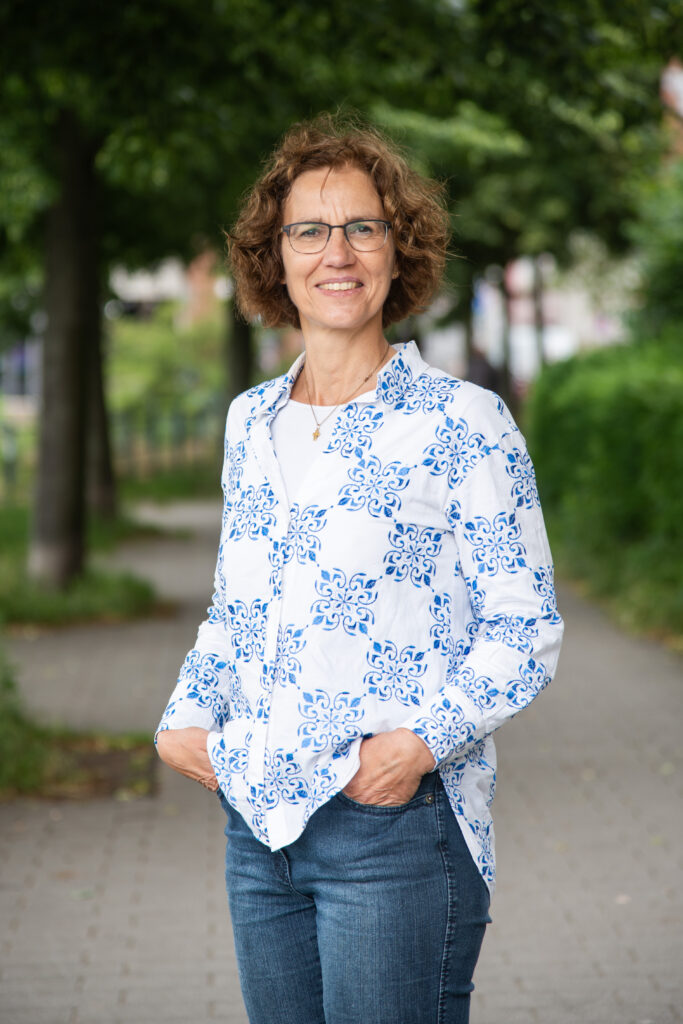
In this feature, we are especially proud to highlight Prof Iris Bruchhaus, Head of the Host–Parasite Interaction Research Group at the Bernhard Nocht Institute for Tropical Medicine in Hamburg. Her longstanding work and leadership in malaria research have significantly contributed to the field and continue to inspire the next generation of scientists.
In this short interview, she reflects on her career, shares her perspective on current challenges, and advice for young researchers entering malaria research.
1. What drew you to malaria research?
Malaria has always been a key area of research at the Bernhard Nocht Institute for Tropical Medicine.
Having previously worked on various parasitic pathogens, my basic research on malaria raised new and exciting questions that piqued my interest and led me to want to explore them in greater depth.
2. What has changed the most in malaria research over your career?
Technological advancements have undergone significant changes, particularly in the field of basic research. New methods such as next-generation sequencing, single-cell sequencing, and the targeted genetic manipulation of parasites have greatly deepened our understanding of malaria pathogens and their interaction with the host, and have opened up new avenues of research.
3. Which new technologies excite you most today?
I find new genetic methods that allow for targeted interventions in the parasite particularly exciting.
One example is the Selection-Linked Integration (SLI) method, which was developed by Tobias Spielmann’ s research group. It made my research group’s experiments possible in the first place and opens up entirely new possibilities for systematically investigating functional relationships within the parasite.
4. What are the biggest remaining challenges in malaria research, treatment and control?
One of the most important unresolved questions is how to achieve long-lasting and complete immunity against the Plasmodium falciparum parasite. At the same time, increasing resistance to drugs and insecticides poses a major threat, as it undermines existing treatment and prevention strategies.
In addition to these biological challenges, there is an equally significant hurdle in the practical implementation of existing measures. For example, many effective interventions—such as medications, mosquito nets, or diagnostic tools—do not reach the affected regions sufficiently.
5. What advice would you give to young scientists approaching the malaria field?
Stay curious and avoid specialising too narrowly too early. Malaria research is a highly interdisciplinary field, ranging from molecular biology and immunology to global health, and it is precisely at these intersections that the most exciting discoveries often emerge. At the same time, it is important to familiarise yourself with modern methods early on and build a solid methodological foundation. Perseverance and the willingness to deal with setbacks are equally crucial, as research rarely proceeds in a straight line. Last but not least, it is worthwhile to build networks and seek dialogue with other working groups, as many important advances result from collaboration.
6. What message would you share for World Malaria Day?
Malaria remains a major challenge, but with consistent research and and better implementation of existing tools, we can achieve a great deal.
Article by Viola Introini and Michaela Petter, Erlangen
 English
  German