
Exploring the Hidden World of Fungal Pathogens
_________________________________________________________________________________________________________________________________
For World Fungus Day, we are pleased to share the perspective of Dr. Slavica Janevska, who reflects on the remarkable diversity and importance of fungi, from their essential roles in food, biotechnology and natural product discovery to their impact as emerging human and plant pathogens. Drawing on her research journey and current work at the Leibniz-HKI, Slavica offers a glimpse into the fascinating biology of Fusarium and the research efforts aimed at understanding how these fungi adapt, evolve and cause disease.
Read Slavica’s perspective below and discover why fungi are not simply our foes, but also our friends.
Dr. Cláudia Vilhena
_________________________________________________________________________________________________________________________________
World Fungus Day is an excellent opportunity to reflect on how important fungi are for our society, but also to reflect on all of the achievements of the last year of our research group working on the cross-kingdom fungal pathogen Fusarium at the Leibniz-HKI in Jena.
Fungi, visible or not, have massive importance for us, and not only provide a nutritious food source but are also impeccable promoters of plant growth, as well as work horses for biotechnological and industrial applications. They produce invaluable compounds, some of which are applied as anti-infectives or other drugs. Of course, they do not produce such compounds to our benefit, but rather as molecules for communication, defense or virulence under natural conditions. Being selected for survival, some fungi (actually the minority!) have adapted to cause devastating diseases of plants and humans, which endanger our food security and health, oftentimes giving fungi a bad reputation. Both the good and bad guys are equally important, and I’d like to take this opportunity to highlight the importance of fungal research for our society’s understanding of the macro- and microverse. Studying fungi, which are closer related to animals than to plants but with considerably shorter generation times, allows for the dissection of evolutionary processes and adaptations to new selection pressures under laboratory conditions - or even under natural conditions in some instances, such as conditions quickly giving rise to drug-resistant pathogen lineages - which is utterly fascinating.
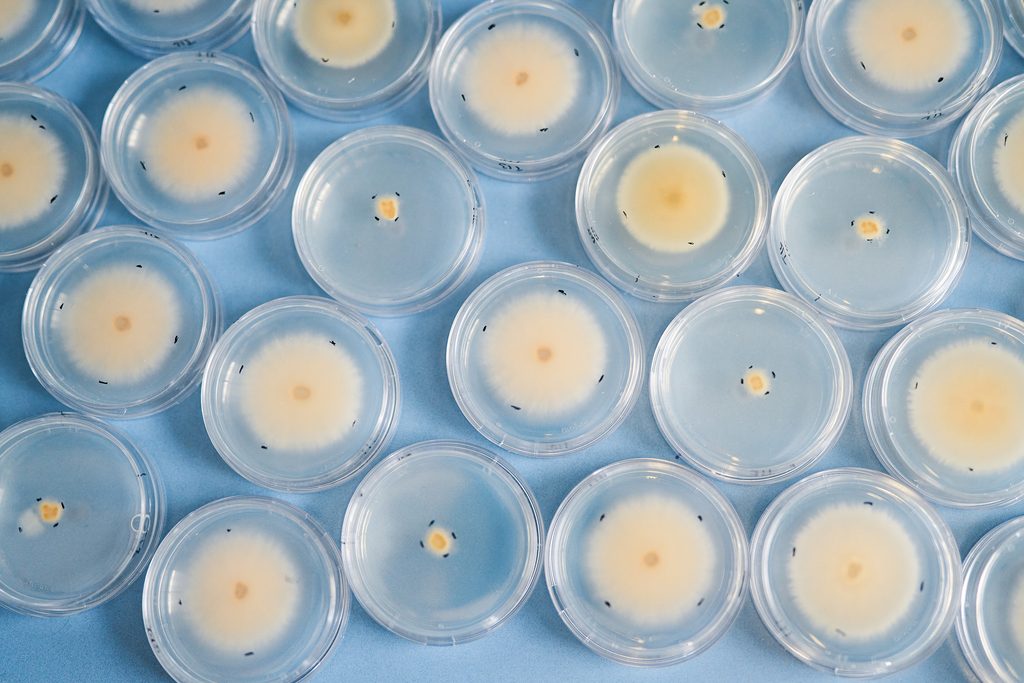
Since starting to work with Fusarium species during my Master thesis in 2013 at the University of Münster, I have never looked back. Having great female role models during my Master and PhD studies, in addition to being fully immersed in my research, provided me with the courage to continue with a career in academia, following the completion of my PhD in 2017. This led me first to a 1-year Postdoc at the Leibniz-HKI, where I would later establish my Junior Research Group in 2023, interspersed with a 3-year DFG-funded Research Fellowship (today known as Walther-Benjamin-Program) at the University of Amsterdam.
I followed up on exciting results from my PhD on mobile accessory chromosomes, and how histone modifications contribute to their genomic stability.This culminated in a comprehensive study on H3K27-specifc histone modifiers, themselves encoded on accessory chromosomes, and a first report that they contribute to the overall epigenetic profile, which was published this year in Nucleic Acids Research.
Accessory chromosomes are a particularly fascinating means of fungal adaptation, since they do not contribute to housekeeping functions, but oftentimes encode specialized functions such as virulence factors, which we’re studying in Fusarium oxysporum as a model. This group of closely related fungi, historically referred to as species complex but experiencing recent reclassification through the description of individual species, encompasses cross-kingdom pathogens able to infect multiple hosts, including plants and animals. This led the World Health Organization to highlight Fusarium species as high priority pathogens in the first Fungal Priority Pathogens List released in 2022. For plant-pathogenic F. oxysporum, virulence and host specificity are determined by accessory chromosomes and therein encoded virulence factors, which have been demonstrated to be mobile and to thereby transfer virulence traits.
While coming from the plant pathogen field, since starting my Junior Research Group (Epi-)Genetic Regulation of Fungal Virulence, we work with clinical isolates of F. oxysporum and are in the process of dissecting the contribution of their unique accessory chromosomes to opportunistic human virulence, employing a broad range of interdisciplinary techniques, including whole-genome sequencing, transcriptomics, metabolomics, loss and transfer of single genes or full accessory chromosomes as well as subsequent in vitro infection assays. This is truly only possible with a dedicated team, and the excellent resources and research groups at our institute. I’d like to specifically point out the National Reference Center for Invasive Fungal Infections (Dr. Grit Walther) who is sharing their clinical isolate collection with us, while characterizing the isolates’ epidemiology.
I’d like to end on a positive note on how fungi are not only our foes but our friends as well. This year, our new project FUSION launched, which includes the identification of novel bioactive natural products from Fusarium, in collaboration with Dr. Luzia Gyr (Robotic-assisted Discovery of Antiinfectives, robotics platform JenXplor). Combining genome mining and metabolomics approaches, we’re in the frame of identifying and characterizing so-far unknown compounds with great bioactive potential.
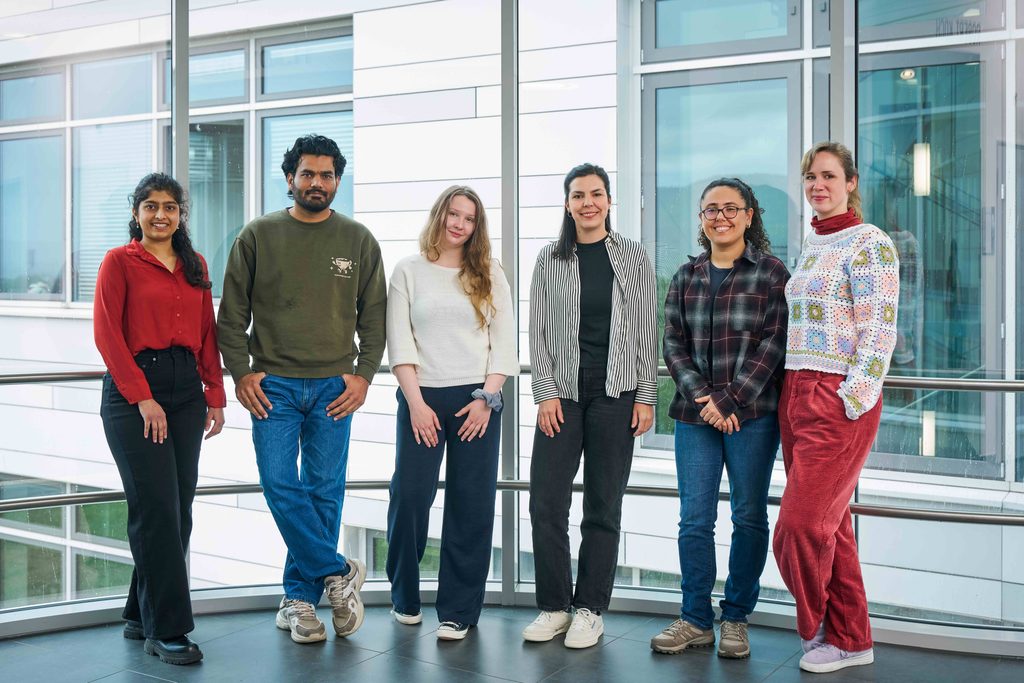
I am looking forward to all of the results and publications in the pipeline for next year, and to all of the exciting findings of small and large scale. This job really poses new surprises each day, and thrives from national and international collaborations in which societal boundaries are overcome. Without mentioning each one individually, I am grateful and looking forward to continued collaborations with all of my colleagues and friends in Germany and around the world.
 English
  German